
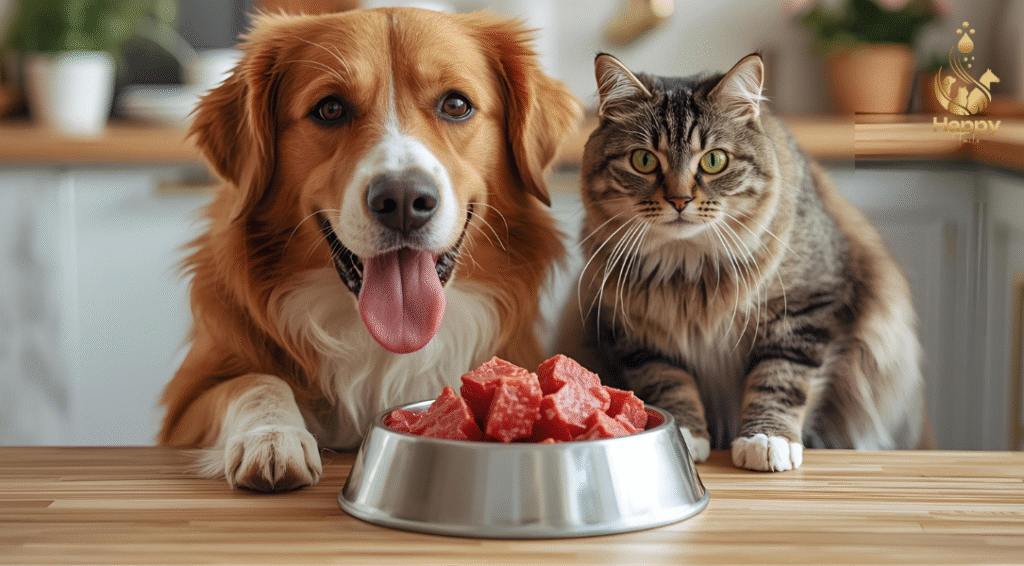
In the world of holistic pet healing, many people begin their journey by exploring remedies—herbal blends, essential oils, detox formulas, probiotics, flower essences, and energetic supports. While these tools can make a meaningful difference, there is a foundational truth that often gets lost: healing begins with food. Before any remedy can be fully effective, the diet must align with the animal’s biological needs, which is why a species-appropriate diet for dogs and cats forms the true starting point of all healing.
A raw food diet for dogs and cats remains the closest to what nature intended. This is the diet their digestive systems were built for—enzyme-rich, moisture-dense, unprocessed, and species-appropriate. But today’s world is different than the environment animals evolved in. Many pets are dealing with chronic gut damage, environmental toxins, vaccine overload, emotional trauma, and compromised vitality.
For these animals, a thoughtful homecooked diet can be an essential bridge or even a long-term option. Homecooked meals allow the body to receive fresh, whole nutrients without overwhelming the digestive system with the detox strength of raw.
This article explores how raw and homecooked diets work together, why nutrition must be corrected before introducing remedies, and how to determine which diet is right for your pet.
The body cannot heal if the diet itself is creating inflammation, gut imbalance, or immune dysfunction. Remedies support healing—they cannot replace the need for foundational nutrition.
If your dog or cat struggles with persistent itching, anxiety, gut symptoms, chronic ear issues, recurring infections, or behavioral challenges, diet can certainly be at the root. In fact, many of the symptoms people try to treat topically or behaviorally are actually driven by internal imbalance.
Many of the symptoms people try to treat topically or behaviorally are actually driven by internal imbalance.
Learn more about how diet, gut health, and emotional balance intertwine:
Natural Remedies for Itchy & Anxious Pets
Once nutrition is corrected, remedies begin to work as intended—not as band-aids, but as true healing tools.
Dogs and cats are designed by nature to thrive on raw food. Before commercial pet food existed, they consumed prey animals—raw bones, organs, cartilage, muscle, and fat. Everything about their anatomy reflects this:
A raw diet supports:
But there’s another layer to this conversation. Raw is natural—but so is detoxification. And in today’s environment, detoxing can be intense.
Decades ago, switching to raw food alone often resolved most chronic issues. But pets today face an unprecedented toxic load:
When these pets transition immediately to raw, the body may begin detoxing too quickly. This can lead to temporary but uncomfortable symptoms:
These aren’t signs that raw food is “bad”—they are signs that the body is finally releasing stored toxins. But for elderly pets or those with fragile health, detoxing too quickly can overwhelm the system.
A homecooked diet is still fresh, species-appropriate, and nutrient-dense—but it is gentler on digestion. Cooking lightly breaks down proteins, reduces microbial load, and decreases the detox intensity of raw.
A balanced homecooked diet can be essential for pets who:
Homecooked diets reduce the digestive wokload while still delivering real, whole nutrients—without the additives, binders, and carbohydrate fillers found in kibble.
A species-appropriate cooked diet still follows the same principles as raw feeding:
It is important that homecooked diets are balanced; otherwise, nutritional gaps will eventually appear. Many holistic pet parents rotate between raw and homecooked depending on seasonal needs, stress levels, or health conditions.
About 70% of a dog or cat’s immune system resides in the gut. When the gut becomes imbalanced—due to poor diet, toxins, stress, or medications—symptoms begin to appear in many forms:
Ear infections, for example, are almost always rooted in gut imbalance, not simply “ear problems.” Learn more here:
Chronic Ear Issues: Gut & Immune Root Cause
Correcting the diet begins restoring the microbiome, strengthening the immune system, and calming behavior—because the gut and brain are deeply connected.
Both diets can be incredibly healing. The key is matching the diet to your pet’s current vitality, not just their ideal biological design.
Transitioning should be done slowly, especially for pets with sensitive stomachs or weakened digestion. Gradual transitions help minimize detox, stabilize the gut, and prevent discomfort.
A safe transition may look like:
If transitioning to raw feels too intense, start with homecooked first. Once digestion is stronger, you can introduce raw in stages or as toppers.
Raw food remains the biological blueprint. Even if your pet cannot tolerate 100% raw immediately, integrating raw components—such as raw goat milk, raw eggs, or freeze-dried raw toppers—can still provide powerful benefits.
Raw food provides living enzymes, unprocessed nutrients, and moisture that kibble cannot replicate. But healing requires respecting each pet’s unique history and health journey.
Once the diet is corrected, remedies become far more effective. Whether you’re using herbal blends, detox formulas, energetic remedies, flower essences, or homeopathy, their impact multiplies when the body is no longer fighting inflammatory or inappropriate food.
When nutrition aligns with biology:
Food is the foundation upon which all healing happens. Once that foundation is strong, everything else can finally work the way it was meant to.
As we move deeper into the conversation about nutrition, one theme continues to rise to the surface: diet is not just a factor in your pet’s health—it is the terrain on which the foundation is built. This is why so many behavior issues, chronic symptoms, emotional imbalances, and recurring digestive problems struggle to resolve fully when the foundational diet is out of alignment. Remedies simply cannot outperform the food your dog or cat eats every single day. The body is forced to work with what it’s given, and when the diet is overly processed, dehydrating, enzyme-deficient, chemically treated, or biologically inappropriate, the body has no choice but to sacrifice long-term vitality in the name of short-term survival.
Even the best flower essences, homeopathic remedies, herbal blends, and energetic formulas cannot override a diet that consistently inflames or weakens the system. This is why raw feeding—and in certain cases, a therapeutic homecooked approach—sets the stage for every other healing modality to work better. When you’re no longer pouring inflammatory input into the system day after day, the body becomes more receptive, less burdened, and more responsive to whatever holistic support you introduce. It’s the difference between trying to treat symptoms in a smoke-filled room versus stepping into fresh air before applying medicine. One approach fights uphill; the other flows with the body’s natural ability to heal.
But there is an even deeper dimension to this conversation—one that pet parents often feel intuitively but can’t quite put into words: when our animals return to biological nutrition, something shifts not only in their physical health but also in their emotional state, vibrancy, and overall presence. A biologically aligned diet doesn’t just fuel the muscles and organs—it nourishes the nervous system, stabilizes behavior, and supports a sense of calm confidence. Dogs and cats fed raw or fresh food often display clearer eyes, more grounded energy, and a more resilient emotional baseline. They are less reactive, less anxious, and less prone to the internal turbulence that arises from digestive discomfort, nutrient depletion, or low-grade inflammation.
A biologically aligned diet doesn’t just fuel the muscles and organs—it nourishes the nervous system, stabilizes behavior, and supports a sense of calm confidence.
And yet, as many integrative practitioners will tell you, today’s world presents new and increasing challenges. Environmental toxins, pesticide exposure, pharmaceutical residues, excessive vaccination schedules, emotional stress, and generational toxicity have created a landscape where even animals on beautifully crafted raw diets sometimes need additional support. For some pets—especially seniors, rescue animals, those with compromised immunity, or those healing from trauma—raw feeding alone will not clear the entire picture. The diet lays the foundation, but the house still needs additional support beams.
This is where detox remedies, trauma-release blends, emotional support formulas, gut-balancing tools, and immune-modulating remedies become powerful allies. But these tools work best—and most gently—when the diet has already been corrected or is being integrated simultaneously. Introducing detox remedies while feeding highly processed kibble often leads to frustration or “detox crisis” symptoms that feel more like worsening illness. Meanwhile, introducing a whole-food diet dramatically reduces the toxic burden on the body, allowing the animal to detox at a natural pace and making any additional support far more effective.
For pets who cannot transition to raw immediately due to age, fragility, digestive weakness, or toxin overload, this is where a nourishing, thoughtfully crafted homecooked diet becomes a bridge rather than a compromise. Homecooked meals introduce moisture, freshness, natural enzymes, and species-appropriate nutrients without overwhelming the system. This gives the liver and kidneys space to stabilize. It gives the gut microbiome time to reorient itself. And most importantly, it gives the animal a gentle, loving transition toward more biologically aligned nutrition without forcing detox faster than their body can handle.
Many people are surprised to discover that a strategic homecooked diet can be just as healing as raw—especially when used temporarily for transition, immune recovery, or digestive repair. And once the pet has regained strength and balance, raw feeding often becomes easier, more appropriate, and more beneficial. This tiered approach honors the individuality of each animal and acknowledges that healing is not linear but layered.
The goal is not perfection; the goal is alignment. Alignment with biology. Alignment with nature. Alignment with what your pet’s body recognizes as food. Whether your companion begins with raw, transitions through homecooked, or uses a blend of both based on life stage or health needs, the power lies in choosing fresh, real, species-appropriate nourishment. When you make that shift, everything else you do—from remedies to training to behavior work—begins working more efficiently and harmoniously.
Above all, remember this: if your pet is struggling with skin issues, ear infections, anxious behaviors, gut imbalances, or immune-related symptoms, the first step is always the diet. If you haven’t explored the deeper connections behind these symptoms, these resources will help: itching or anxiety and chronic ear issues.
When you honor the nutritional blueprint that nature created for dogs and cats, you create the conditions for true healing to occur—physically, emotionally, and energetically. Diet is not just food. It is information. It is medicine. It is the foundation upon which we begin the journey to wholeness.