

When we lose someone we love, grief can visit us. We understand the silence, the emptiness, the change in routine, and the strange feeling that something essential is missing. Animals experience loss, too.
Dogs, cats, and horses are sentient beings capable of forming deep emotional bonds with other animals and with the people in their lives. When one of those relationships suddenly ends, the surviving animal may not understand where their companion has gone. They simply know that someone who was woven into the rhythm of daily life is no longer there.
Sometimes that grief is subtle. An animal may become quieter, sleep more, or lose interest in things they normally enjoy. Other times, it is unmistakable.
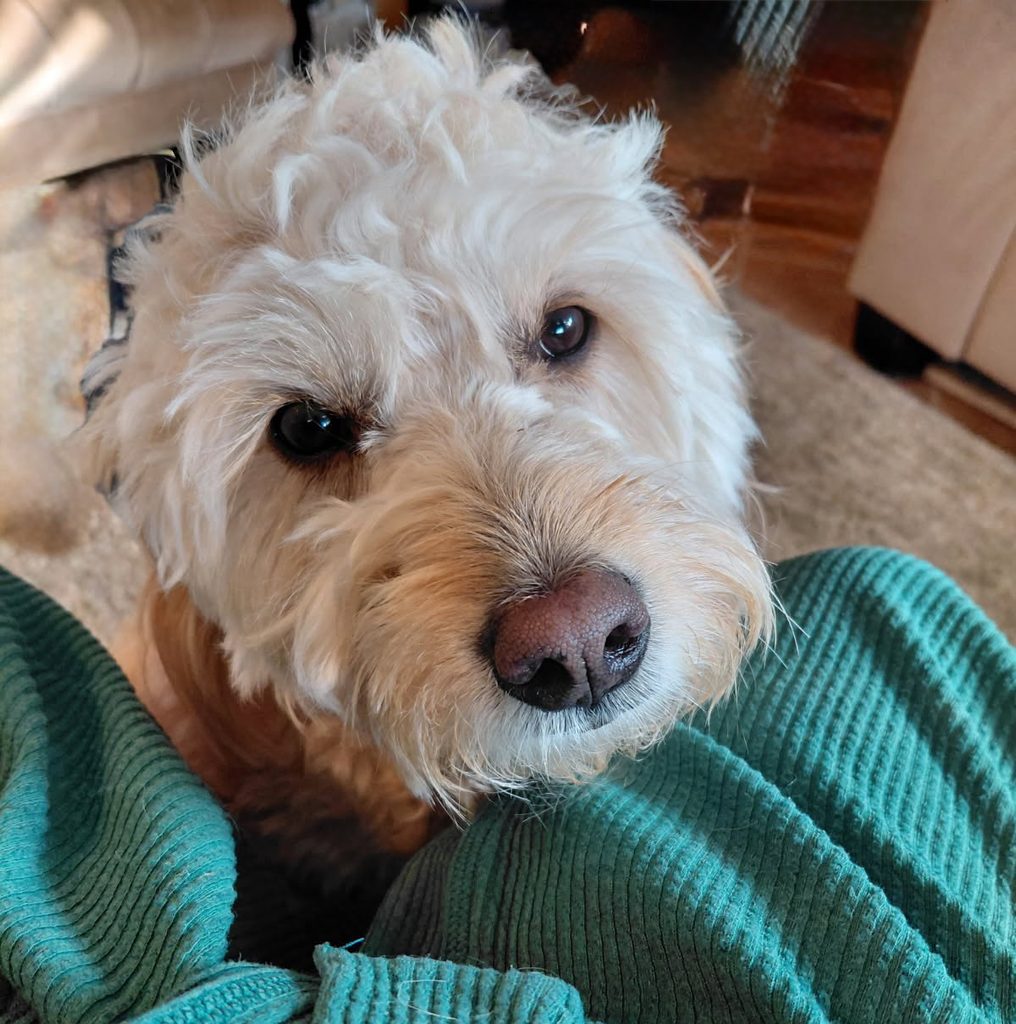
Rosie was only three years old when Sally, her 16-year-old Labrador companion, made her transition. Sally had been far more than another dog in the household. Rosie had essentially been raised by her, and the two shared an extraordinary bond—deep, trusting, and almost maternal in nature. Sally offered Rosie a steady source of comfort, guidance, protection, and unconditional love. She was Rosie’s friend, her teacher, her safe place, and a familiar presence woven into nearly every part of the world Rosie had known from the beginning.
After Sally passed, Rosie’s guardian watched her change. The joyful young dog she knew seemed to disappear beneath a blanket of sadness. For weeks, Rosie waited at the door for Sally to come home.
Rosie’s story is a beautiful example of something many pet parents recognize instinctively: animals love deeply, and when a bond is broken by death or separation, they may need time, understanding, and support as they find their way through the grief.
Sentience means having the capacity to experience sensations, emotions, and awareness. Anyone who has lived closely with an animal has likely witnessed this firsthand. A dog knows when another dog is missing. A cat may search rooms after a bonded companion disappears. Horses may call for herd mates or change their behavior after separation.
Their relationships are built through everyday life. Animals may sleep beside one another, play, groom, follow routines, seek reassurance, learn from an older companion, and simply take comfort in one another’s familiar presence.
When one animal dies, the survivor may lose companionship, familiarity, routine, security, and one of the relationships through which they understood their world. The depth of the grief often reflects the depth of the connection.
Pet grief does not always look like human sadness. Some animals become quiet, while others become restless, anxious, unusually clingy, or withdrawn. An animal may also search for the companion who is gone or repeatedly return to familiar places.
You may notice:
Rosie did exactly this. For weeks after Sally died, she continued waiting at the door as though the companion who had always been part of her life might still return.
Cats may hide more or change familiar routines. Horses may call, pace fence lines, become subdued, or show changes in herd behavior. There is no single expression of grief.
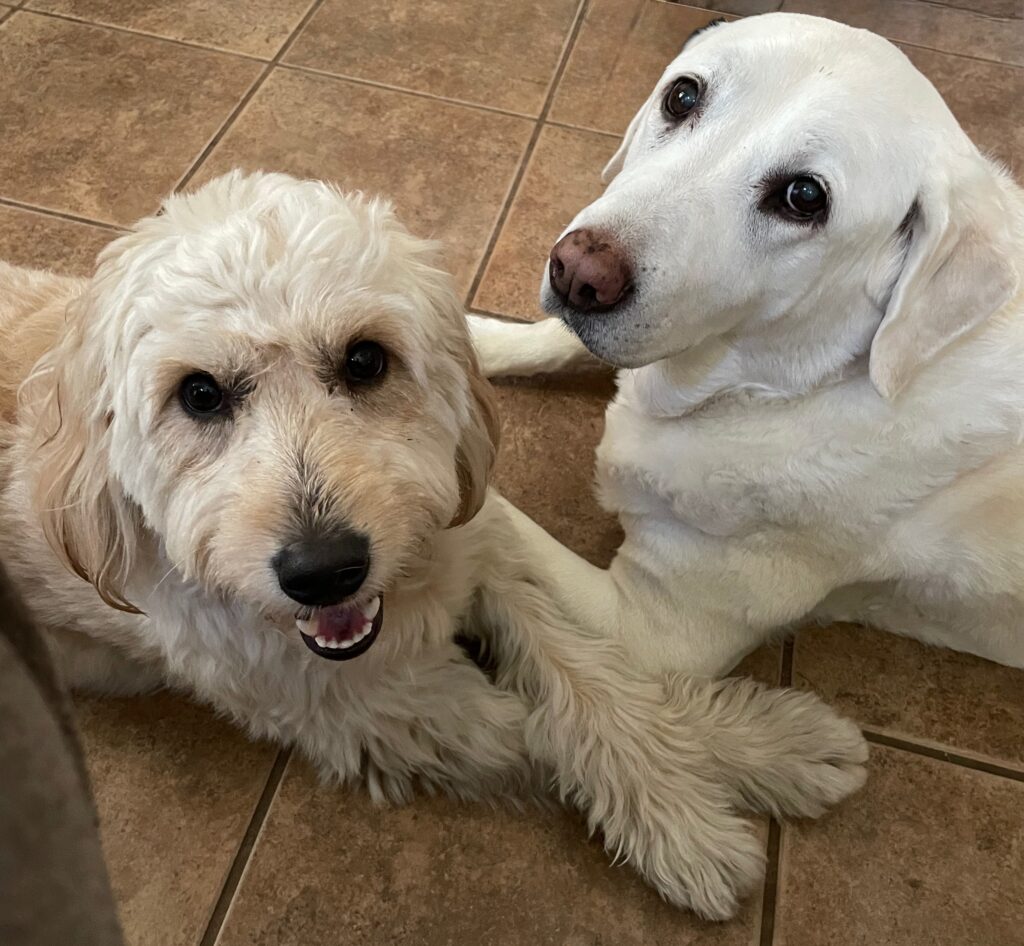
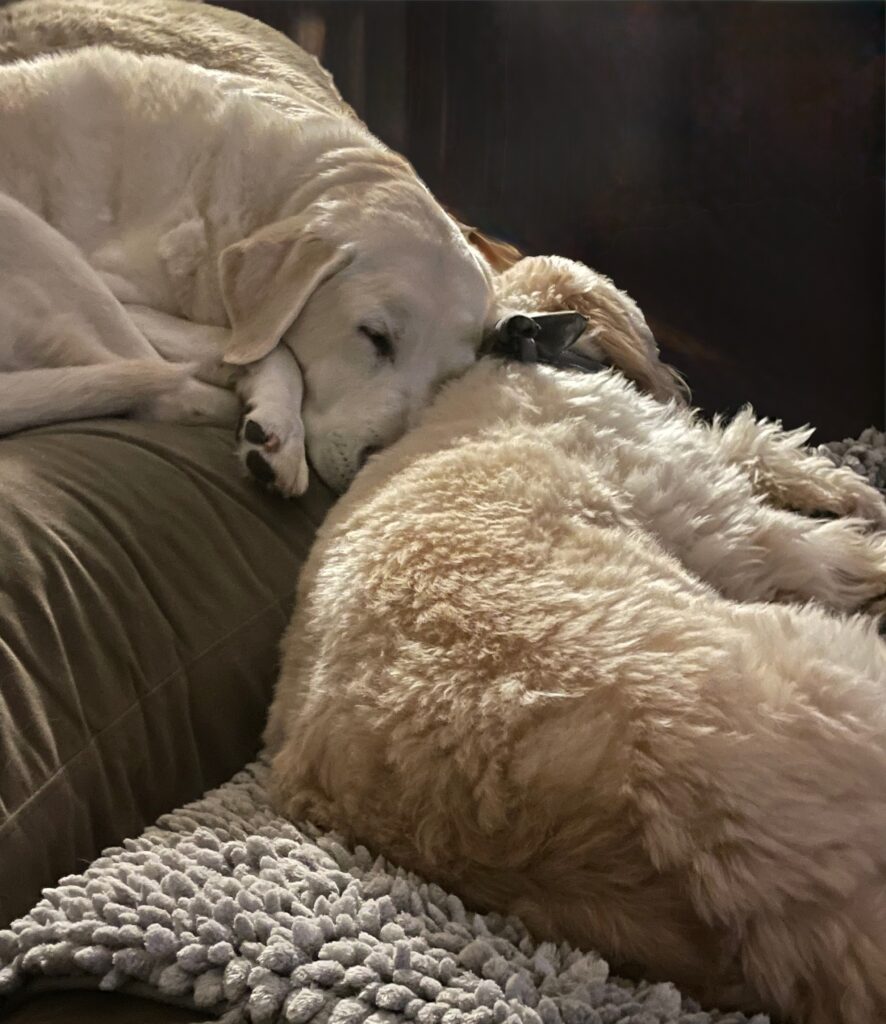
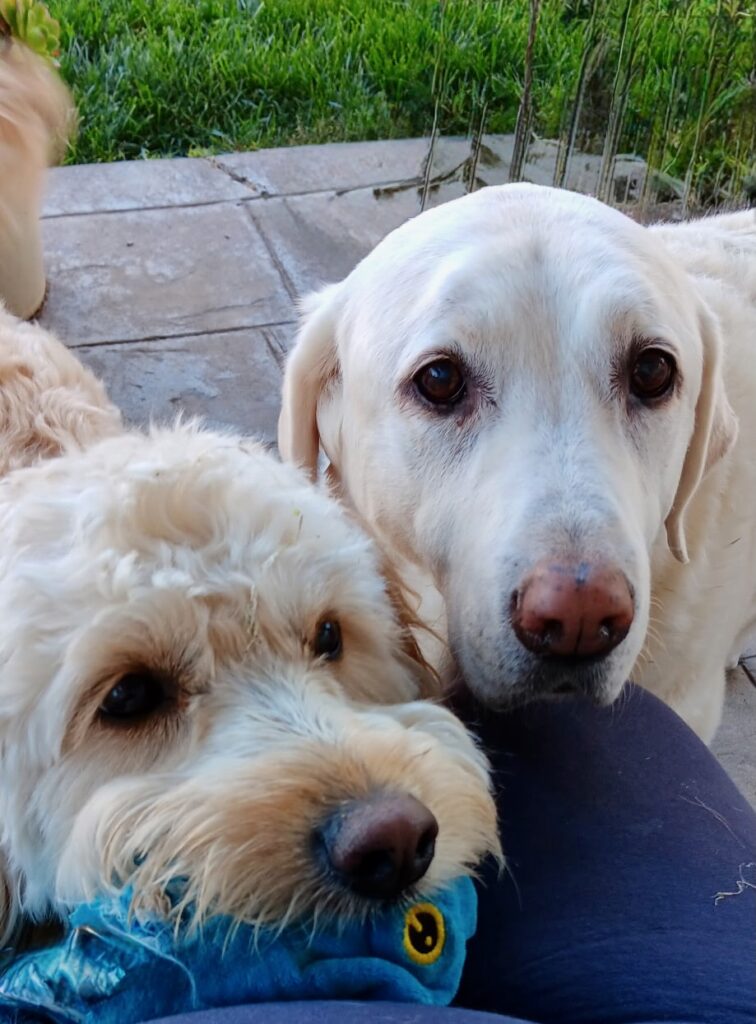
For Rosie, Sally had always been there. At only three years old, Rosie had spent most of her life with this older Labrador beside her. Sally represented familiarity and belonging, and Rosie had grown into herself within that relationship.
Sally herself had been supported with a Happy Tails protocol for years, something her family felt made a profound difference in her quality of life as she aged. Older animals can quietly teach younger animals the rhythms of a household without anyone consciously realizing it.
Through ordinary life, the older companion may communicate:
Without anyone assigning the role, the older animal can become an emotional anchor. Sally had been that presence for Rosie. When Sally died, Rosie was not simply missing someone she played or slept beside. A relationship around which much of her young life had developed was suddenly gone. Her waiting at the door made that loss visible.
At Happy Tails, we do not separate emotional wellness from physical wellness. Body, mind, emotions, and energy continually influence one another. During grief, a guardian may notice changes in appetite, digestion, sleep, energy, social interaction, confidence, or interest in the environment. Sometimes there is no dramatic physical change at all; the guardian simply knows their animal is not behaving like themselves.
Affection, familiar routines, nourishing food, rest, movement, companionship, and a sense of safety can all be valuable. Gentle emotional and energetic support can become another part of that care without interrupting the animal’s natural process.
Tender Heart Grief Relief was created specifically for animals moving through grief, loss, separation, and significant emotional transition. The blend contains energetic frequencies and supportive flower essences selected around emotional patterns connected with grief and sadness, separation, attachment, emotional shock, withdrawal, difficulty adjusting to change, and the gradual return toward emotional balance.
Tender Heart is intended to gently support the emotional system while the animal adjusts to a reality that has changed. Rather than trying to force a behavior or hurry the process, the intention is to support the animal’s own movement toward balance.
Sometimes that movement is quiet: a little more interest, a willingness to engage, a return to play, or simply more presence in the eyes. The relationship remains while the heaviness begins to change.
Grief does not follow a fixed timetable, and each animal moves through loss in their own way. One may begin engaging with life again within days or weeks, while another may need much longer.
The pace belongs to the animal.
What matters is not whether grief disappears quickly, but whether the animal is being given enough safety, consistency, space, and support to process the change naturally.
Those shifts can be subtle:
Progress may not be linear. A brighter day followed by a difficult one does not mean the animal is moving backward. Grief has its own rhythm and should not be hurried.
Rosie’s guardian gave her that space. She recognized the depth of the loss without forcing a timetable. Tender Heart became one part of that support as Rosie gradually began finding her way back toward herself.
After Rosie began receiving Tender Heart Grief Relief, her guardian began noticing a meaningful change. The heaviness that had overtaken this young dog started to lift. Rosie became more present and engaged, and the young dog her owner recognized began coming forward again.
Rosie’s guardian had sent me these two photographs by text. With the first photo she wrote, “Before Debbie.” With the second, “After Debbie.” Those were her exact words.

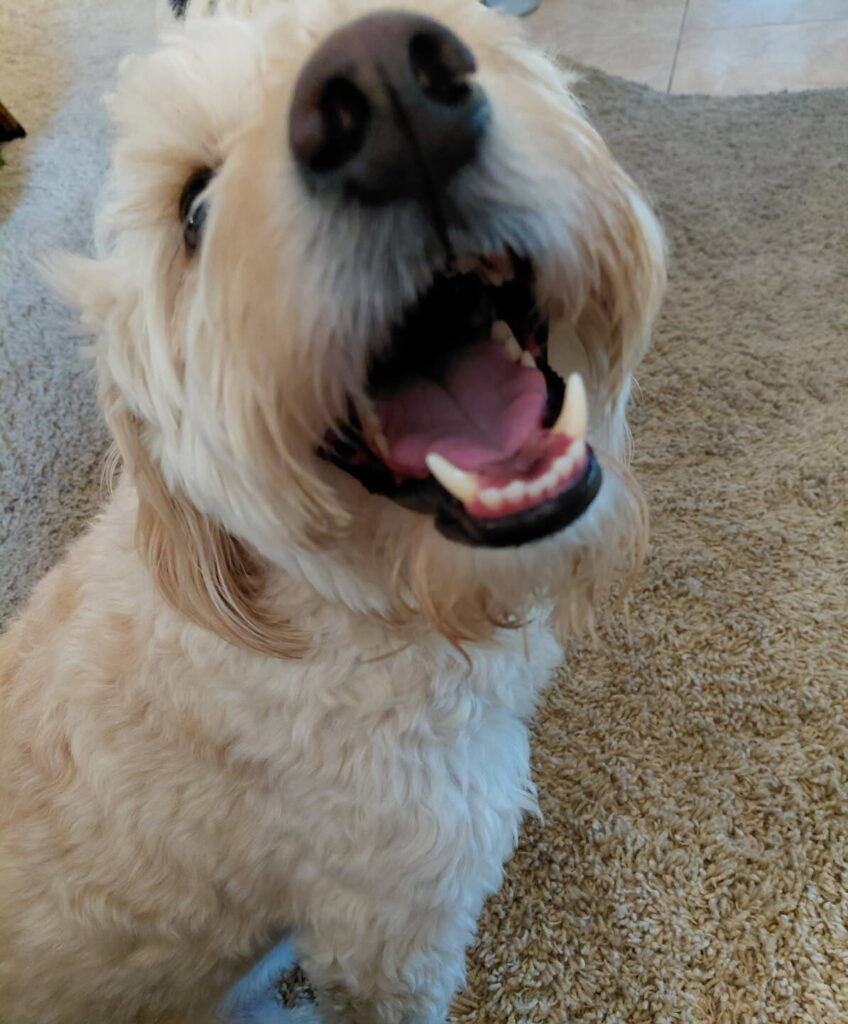
A guardian who lives closely with an animal knows their expressions, rhythms, habits, interests, and energy. As balance begins returning, there can be a familiarity in the eyes, the posture, the curiosity, and the willingness to participate. You begin to see the animal you know again.
For Rosie, this did not mean Sally had been forgotten. Sally would always be part of her story and part of the young dog she became. What changed was Rosie’s ability to be present in the life of the ever-present moment.
We often speak about “moving on” after loss, but love does not have to disappear in order for joy to return. An animal can retain the bond and memory of someone important while gradually becoming interested in life again. This is what I mean when I speak about helping grief transform into joy. It is not denying what was lost. It is allowing grief to stop occupying all of the emotional space so that connection, vitality, curiosity, and joy have room to return alongside the memory.
Rosie did not need to stop loving Sally in order to become a happy young dog again. She needed time, understanding, support, and the freedom to find her way through the change.
Grief does not require death. Animals can grieve any meaningful separation in which an important relationship or familiar presence suddenly disappears. This may include a shelter animal losing a previous guardian, a foster animal leaving a foster family, a puppy leaving its mother and littermates, bonded animals being adopted separately, a horse losing a stable mate, or a family member leaving home.
We may understand why the separation occurred, but the animal experiences the absence. Someone who was part of normal life is suddenly no longer there, and the animal must begin creating a new sense of normal.
Someone I love was here. Now they are not.
Tender Heart was created for this broader experience of loss as well as grief following death.
Emotional support is not only about giving a blend. Familiar routines can provide an important sense of steadiness when another part of life has changed dramatically.
Helpful support may include:
Some animals want considerably more contact after a loss, while others withdraw and need room. Neither response is inherently better. There can be something deeply loving in allowing an animal to be where they are while quietly creating the conditions that help them feel secure enough to open toward life again.
Often, the surviving animal is not grieving alone. Familiar rhythms can provide reassurance for everyone, and grief and normal life can exist together.
The purpose of Tender Heart is not to make an animal stop caring or to turn sadness into artificial happiness. It is to support the heart while it adapts.
Grief exists because there was connection. Sally mattered to Rosie. Their relationship helped shape Rosie’s early life, and nothing about emotional healing needs to diminish that. Tender Heart simply offered support while Rosie found her way through the weight of Sally’s absence and back toward her own natural expression.
That distinction is at the center of the Happy Tails philosophy. We are not trying to create a different animal. We are supporting what is already true underneath the imbalance.
For Rosie, underneath the grief was still a bright, young dog capable of curiosity, play, connection, affection, and joy.
Rosie’s before-and-after photographs tell an important story. Animals are not simply responding mechanically to changes in their environment. They are conscious, relational beings whose experiences and relationships have meaning.
Given time, love, stability, and the right support, an animal can move through profound sadness without losing the relationship that created it. The memory remains, but it becomes part of life rather than something that prevents life from continuing.
Rosie did not forget Sally, nor would we want her to. Sally helped raise her. That relationship remains part of Rosie’s history and part of the dog she became. What changed was that Rosie no longer needed to remain at the door waiting for life to become what it had been before. She could begin participating in the life that is still here.
Perhaps that is one of the great lessons animals quietly teach us about grief: the heart has room for both remembrance and joy.
Recognizing pet grief begins with recognizing the depth of an animal’s capacity to love. Rosie loved Sally, and for weeks she waited at the door for the companion who had helped raise her to come home. Her grief was real because their relationship was real.
But grief was not the end of Rosie’s story. With time, love, stability, patience, and gentle emotional support, the young dog underneath the sadness began to emerge again. Sally remains part of Rosie’s heart; nothing needs to erase that bond.
There is simply room for life to expand around it again—for curiosity, play, connection, affection, and joy. Love does not have to be left behind in order to move forward. The heart can carry what mattered and still open again.
Explore Tender Heart Grief Relief
If you are looking more broadly at your animal’s emotional and physical well-being, you can also begin with the Wise Pet-Parent’s 5-Point Holistic Pet Wellness Checklist.