
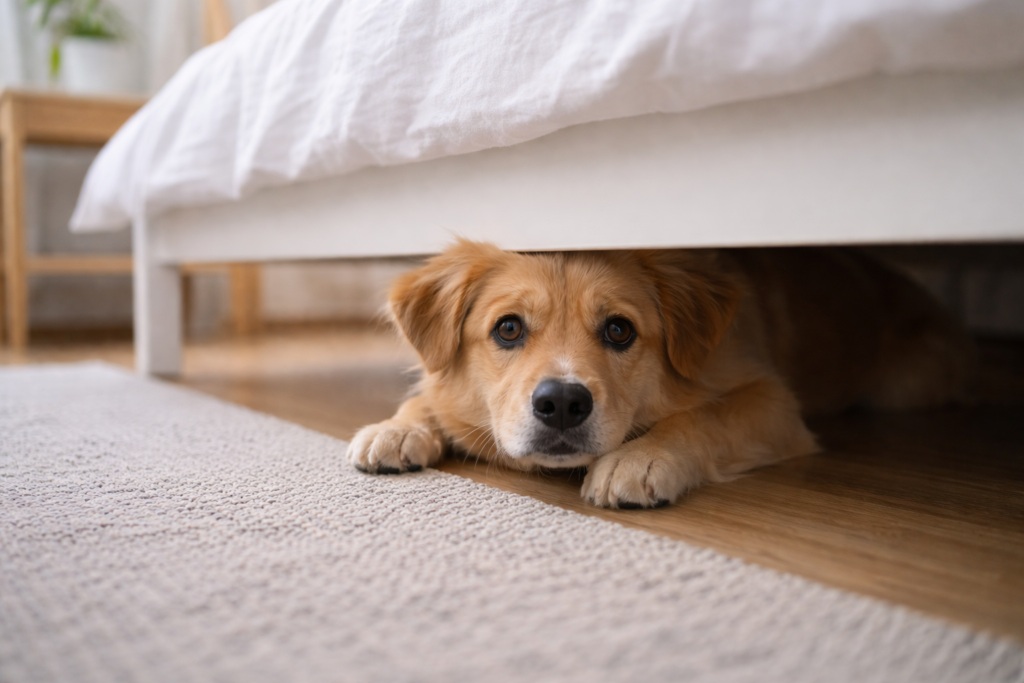
Many pets experience moments of anxiety from time to time. Travel, fireworks, training, grooming appointments, or entering unfamiliar environments can all trigger temporary stress responses.
In these situations, anxiety is often situational. The nervous system reacts to a specific event and then settles again once the experience passes.
However, when anxiety becomes a recurring pattern or appears without an obvious trigger, it may be signaling something deeper within the animal’s body.
Understanding the difference between situational stress and chronic anxiety can help pet parents respond more effectively and support their animal’s long-term well-being.
Situational anxiety occurs when a specific event consistently triggers stress or fear in an animal.
Common triggers may include:
In these cases, the animal’s nervous system reacts to a predictable event. Once the event ends and the environment returns to normal, the animal typically relaxes again.
It’s also important to recognize that physical discomfort can easily show up as anxiety in animals. Chronic itching, skin irritation, digestive upset, or low-grade inflammation can keep the nervous system in a constant state of agitation.
When the body is uncomfortable, the mind rarely settles. Many pets labeled as “anxious” are actually reacting to ongoing physical irritation that hasn’t been fully addressed.
This type of anxiety is often well supported by gentle calming remedies that help regulate the nervous system during the triggering situation.
Freedom Formula was designed specifically for these types of stress patterns.
Freedom Formula is a gentle emotional-support blend designed to ease anxiety, calm reactive states, and promote steady emotional balance in pets.
It supports:
This blend works by gently supporting nervous system regulation and helping animals process stressful experiences more calmly.
Sometimes anxiety is not limited to specific events.
Instead, the animal may appear persistently anxious, restless, reactive, or hypervigilant even when nothing obvious is happening.
This is often a sign that the nervous system has been under prolonged stress.
Chronic stress activates the adrenal glands and increases the production of stress hormones such as adrenaline and cortisol. Over time, this constant stimulation can exhaust the body’s regulatory systems.
When this happens, anxiety may be pointing toward deeper physical imbalances rather than simply emotional sensitivity.
If you’re beginning to notice patterns like this in your animal, it can be helpful to step back and look at the bigger picture of their overall health. Our article When Our Emotions Affect Our Pets: Understanding the Bond Without Blame explores how emotional environments, stress patterns, and physical health can all influence your pet’s nervous system.
Several physiological factors can contribute to persistent anxiety patterns in animals.
These may include:
When the body is under physical strain, the nervous system often becomes hypersensitive. This can appear outwardly as anxiety, agitation, reactivity, or difficulty settling.
In these cases, emotional-support blends alone may not be enough to restore balance.
It’s also important to recognize that physical discomfort can easily show up as anxiety in animals. Chronic itching, skin irritation, digestive upset, or low-grade inflammation can keep the nervous system in a constant state of agitation.
When the body is uncomfortable, the mind rarely settles. Many pets labeled as “anxious” are actually reacting to ongoing physical irritation that hasn’t been fully addressed.
If your pet struggles with both itching and nervous or restless behavior, you may find this article helpful: Natural Remedies for Itchy, Anxious Pets. It explores how skin irritation, inflammation, immune stress, and environmental triggers can influence behavior and what natural approaches may help restore balance.
The adrenal glands play a central role in the stress response.
They produce hormones that help the body respond to danger, regulate blood sugar, maintain blood pressure, and support the immune system.
When animals experience repeated stress — whether emotional, environmental, or physical — the adrenal glands may become overworked.
This can lead to a state where the nervous system remains stuck in a heightened state of alertness.
Animals in this condition may show signs such as:
Supporting the adrenal glands and the immune system often becomes an important part of restoring emotional stability.
If anxiety appears chronic rather than situational, it is often helpful to take a broader look at the animal’s overall health.
This may involve evaluating:
A helpful place to begin is reviewing the foundations of your pet’s health using the Wise Pet Parent’s Checklist, which walks through the most important factors affecting animal wellness.
In more persistent cases, a comprehensive approach such as a Foundational Protocol or customized wellness plan may be beneficial.
These protocols focus on supporting detoxification pathways, restoring organ balance, and strengthening immune function so that the nervous system can return to a calmer baseline.
Understanding the difference between these two scenarios helps guide the most appropriate support.
Situational Anxiety
Chronic Anxiety
Both scenarios deserve attention, but they require different levels of support.
If your pet struggles with ongoing anxiety patterns or if their behavior feels unusually intense or persistent, a closer look at their full health picture can be very helpful.
During a private consultation, we explore your animal’s symptoms, emotional patterns, environmental influences, and nutritional history in order to identify potential root imbalances.
Learn more about Private Pet Wellness Consultations
Animals are deeply sensitive beings whose nervous systems respond to many influences — emotional, environmental, and physical.
Sometimes anxiety simply reflects a stressful moment. Other times it may be the body’s way of signaling a deeper imbalance that deserves attention.
By understanding the difference between situational stress and chronic patterns, pet parents can make more informed choices and provide the kind of support their animals truly need.
Sudden anxiety in dogs can be triggered by environmental changes, loud noises, travel, or separation from their owner. However, abrupt behavioral changes can also indicate underlying physical stress such as inflammation, infection, adrenal strain, or dietary imbalance. If anxiety appears suddenly or worsens quickly, it is wise to look at both environmental stressors and overall health.
Chronic anxiety in cats may be linked to environmental stress, household changes, or emotional sensitivity, but persistent nervousness can also reflect deeper physical imbalance. Cats experiencing digestive irritation, inflammation, kidney stress, or immune imbalance may appear restless, reactive, or unable to relax.
Yes. Many physical conditions can affect the nervous system and contribute to anxious behavior. Hormonal imbalances, adrenal stress, infections, inflammation, toxin exposure, and poor diet can all create internal stress that manifests outwardly as anxiety, agitation, or hypervigilance.
Natural support often involves a combination of emotional calming, nutritional balance, and addressing underlying physical stressors. Situational anxiety may respond well to gentle calming remedies such as Freedom Formula, while chronic anxiety may require deeper support to restore immune balance, organ health, and nervous system stability.