
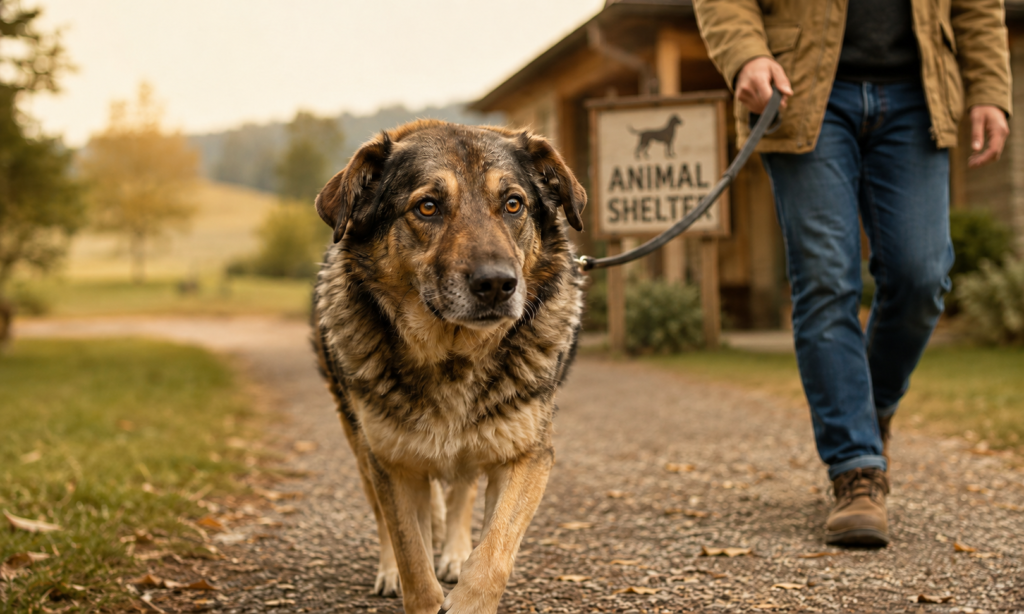
Bringing home a shelter dog or cat is often described as a fresh start, but for the animal, it may not feel that simple. Adoption changes the setting, yet the body and emotional system may still be responding to everything that came before: separation, confusion, overstimulation, unfamiliar handling, disrupted bonds, repeated transitions, or the sudden loss of the only people and environment they knew.
Some shelter animals arrive exuberant and immediately ready to connect. Others seem distant, restless, overly attached, shut down, watchful, or uncertain about ordinary household life. These responses are not signs that the animal is ungrateful, stubborn, aloof, or damaged. They are often signs that your new companion is still trying to understand whether its new world is safe.
The Happy Tails philosophy begins with a simple but important truth: your animal is not a problem to fix. They are a whole being whose body, mind, emotions, and energy have been shaped by experience. Healing begins when we stop asking, “Why won’t this animal settle?” and begin asking, “What does this animal need in order to feel safe enough to become fully themselves?”
A shelter dog or cat may come with a known history, a partial history, or no history at all. Even when we know where the animal came from, we rarely know the full emotional experience behind the facts. A pet who was surrendered may have lost a person, another animal, a familiar home, a daily routine, or every source of stability at once.
Shelter environments can add another layer. New sounds, unfamiliar scents, close proximity to distressed animals, limited rest, frequent handling, and constant stimulation can keep the nervous system on alert. Even animals who appear social or relaxed in the shelter may be relying on excitement, stillness, withdrawal, or constant observation to cope with uncertainty.
Once adopted, the animal must adapt again. New people, rooms, surfaces, rules, sounds, feeding routines, and expectations all arrive at once. What looks like behavioral inconsistency may simply be a nervous system moving between curiosity, fear, relief, and exhaustion.
This is why patience matters so much during the first days and weeks. A shelter animal may be safe now, but their body may need time before it fully believes that safety is lasting.
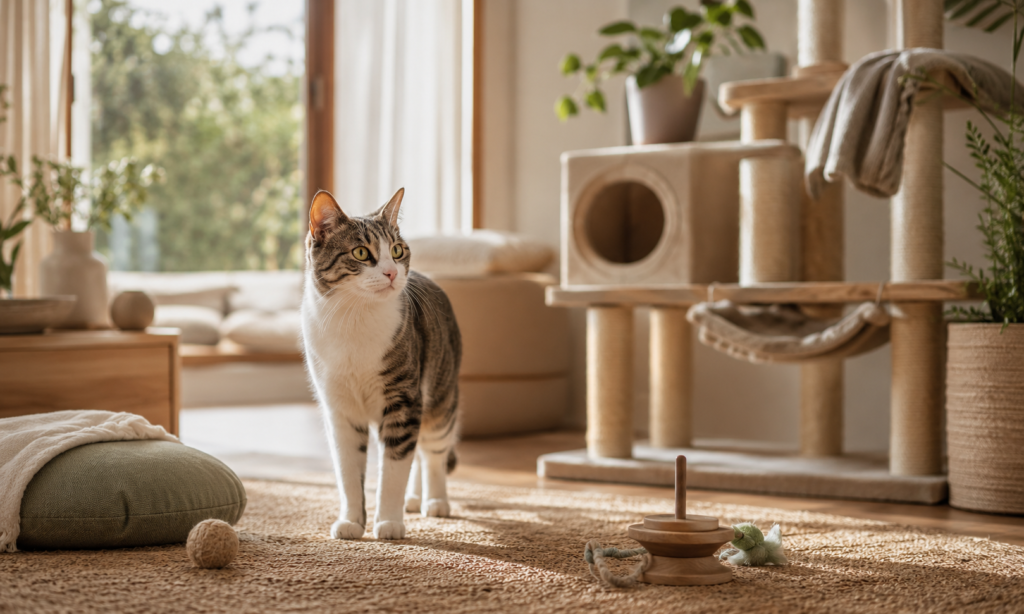
Grief in dogs and cats does not always appear as quiet withdrawal. It can look like pacing, hiding, barking, vocalizing, chewing, overgrooming, following a person from room to room, refusing food, guarding resources, eliminating outside the litter box, reacting to separation, or struggling to rest.
Some animals become intensely attached because they are afraid connection may disappear again. Others keep their distance because closeness has become associated with disruption, restraint, or loss.
These responses can easily be mislabeled as disobedience, neediness, aloofness, stubbornness, or poor behavior. Yet when we understand grief as a whole-body experience, the behavior begins to make more sense. The animal is not trying to create difficulty. They are trying to regulate an experience they do not have words to explain.
A shelter pet may also grieve another animal, a former guardian, a litter, a familiar location, or a role they once held. Even a positive change can bring grief because new beginnings do not automatically erase old bonds.
Recognizing grief changes how we respond. Instead of correcting every outward sign, we can begin supporting the deeper emotional adjustment underneath it.
At Happy Tails, healing is not viewed as forcing an animal into a more acceptable state. The deeper aim is to help restore what is already true underneath the stress, fear, grief, and survival patterns.
Beneath guarded behavior may be a playful dog. Beneath a cat’s hiding may be curiosity and affection. Beneath hypervigilance may be a deeply connected companion, and beneath emotional shutdown may be the natural desire to trust again.
Those qualities have not necessarily disappeared. They may simply be covered by experiences the body has not yet processed.
This philosophy respects the animal’s timing. It does not demand immediate trust, affection, obedience, or sociability as proof that adoption is working. It creates the conditions in which trust can grow naturally.
Those conditions include consistent care, species-appropriate nutrition, clean water, emotional steadiness, appropriate movement or enrichment, predictable routines, respectful handling, and support for the physical and energetic systems of the body.
Healing is not about creating a different animal. It is about helping the animal feel safe enough to reveal who they have always been.
A shelter dog or cat usually does not learn safety through one grand gesture. Safety is built through small experiences repeated consistently: meals arriving on time, water always being available, a quiet place remaining undisturbed, gentle hands, predictable routines, clear boundaries, and people whose emotional responses make sense.
Routines help because they reduce the number of unknowns the nervous system has to process. An animal who knows what happens next can begin to relax out of constant anticipation. Consistency does not mean rigidity; it means creating enough stability for the pet to understand the rhythm of the household.
It is also helpful to limit pressure during the adjustment period. New guardians naturally want to introduce the animal to family, friends, other pets, outings, or every room in the house, but too many experiences too quickly can keep the nervous system activated.
For dogs, that may mean limiting busy walks, dog parks, visitors, or social outings. For cats, it may mean beginning with one quiet room rather than immediate access to the entire home. Quiet integration often builds a stronger foundation than immediate exposure.
There is no universal timetable for a shelter dog or cat to feel fully at home. Some animals begin relaxing within a few days, while others need several weeks or months before their personality becomes more consistent. For animals who have experienced repeated surrender, prolonged shelter stays, trauma, neglect, or multiple foster placements, it may take close to a year before they completely trust that the new home is permanent.
The pet dictates the pace.
This does not mean the guardian should avoid routines, boundaries, or gentle encouragement. It means we do not measure the animal’s progress against another pet’s story or expect trust to appear on a human schedule. A dog may begin playing quickly but remain uneasy when left alone. A cat may come out for meals yet need months before sleeping openly in the room. Another animal may appear settled at first and only reveal deeper fears after several weeks, once the initial survival response begins to soften.
Settling in often happens in layers. The first layer may be learning where food, water, litter boxes, sleeping areas, and safe spaces are located. The next may involve understanding the household routine and learning that people return after leaving. Deeper trust develops through repeated experiences of safety, consistency, respectful handling, and emotional steadiness.
Progress should be measured by the individual animal. Deeper sleep, softer posture, more curiosity, improved appetite, regular grooming, greater willingness to play, and quicker recovery after stress may all show that the pet is beginning to feel secure.

Shelter animals communicate constantly through posture, movement, breathing, facial tension, eye contact, vocalization, appetite, sleep, grooming, elimination, and distance. Learning to read these signals allows the guardian to respond before the animal reaches overwhelm.
Helpful observations include:
Behavior is not separate from wellness. A dog who cannot settle or a cat who remains hidden may be emotionally overwhelmed, physically uncomfortable, overstimulated, or uncertain about expectations.
The goal is not to excuse every behavior. It is to understand the communication well enough to provide the right combination of support, boundaries, reassurance, structure, and space.
Dogs and cats may both experience grief and transition, but they often express their needs differently. Dogs frequently look to people for social direction, routine, movement, and leadership. Cats often rely more heavily on territory, scent, environmental control, hiding places, and the freedom to approach on their own terms.
A newly adopted dog may benefit from calm leash walks, simple household rules, a consistent rest area, and clear guidance about what is expected. This helps the dog understand that they do not have to monitor or manage the entire environment.
A shelter cat may benefit from a smaller introductory space, covered hiding options, vertical perches, familiar bedding, quiet interaction, and predictable feeding and litter routines. Forcing contact, pulling a cat from hiding, or introducing too much territory too quickly can increase fear rather than build trust.
In both species, safety grows when communication is respected. The form may differ, but the principle is the same: the animal needs consistency without pressure.
Emotional healing is more difficult when the physical body is under strain. Many shelter dogs and cats arrive after eating inconsistent or highly processed food, receiving medications or preventive products, undergoing surgery, experiencing digestive changes, or living through prolonged stress.
Stress affects digestion, appetite, sleep, elimination, immune resilience, grooming, and the body’s ability to recover. Supporting the physical terrain can therefore make emotional adjustment easier.
Begin with the foundations: clean filtered water, species-appropriate food, gentle transitions, adequate rest, healthy elimination, and appropriate movement or enrichment. Avoid changing everything at once. The body may already be processing a major life transition, so gradual improvements are often easier to integrate.
Cats may need extra attention to moisture intake, litter-box comfort, quiet eating spaces, and predictable territory. Dogs may need gradual diet changes, regular movement, and relief from excessive stimulation. An animal who is better nourished, hydrated, rested, and physically comfortable has more resources available for learning, bonding, and emotional regulation.
Emotional patterns may also be intensified by underlying physical imbalances. Digestive stress, nutritional deficiencies, toxin burden, depleted organ function, chronic inflammation, or poor immune resilience can affect how safely and calmly an animal is able to respond to the world. This is especially important with shelter dogs and cats because their previous diet, medical care, environmental exposures, and overall health history may be incomplete or entirely unknown.
In these cases, emotional support alone may not address the full picture. The Happy Tails Foundational Protocol may be appropriate when broader support is needed, providing a structured approach to detoxification, restoration, organ support, emotional balance, and long-term maintenance. By supporting the physical foundation alongside grief, fear, or trauma, we give the animal more complete support as they adjust, rebuild resilience, and begin to feel secure.
Shelter animals do not all arrive with the same emotional experience. One pet may primarily be grieving the loss of a person or companion. Another may live in a state of ongoing fear and nervous anticipation. A third may carry a deeper trauma pattern connected to neglect, frightening handling, abandonment, injury, or repeated disruption.
Tender Heart Grief Relief, Freedom Formula, and Trauma Release support different emotional circumstances. Their purposes may overlap, but they are not interchangeable. Choosing between them begins with observing the pattern the animal is showing rather than selecting a blend simply because the pet came from a shelter.
Some animals may need one blend during their transition, while others may move through different needs over time. For example, an animal may first require support for fear and hypervigilance, then later reveal grief once the nervous system has become settled enough for deeper emotions to surface.
The pet’s behavior, history when known, and response over time help guide the choice.
Tender Heart Grief Relief is most appropriate when grief, separation, or emotional loss appears to be the central pattern. A shelter dog or cat may be grieving a former guardian, bonded companion, litter, familiar home, territory, foster family, or the sudden disappearance of everything they previously understood.
Indications may include:
Tender Heart does not erase attachment or rush the grieving process. It gently supports the heart while the animal adjusts to change, receives consistent care, and begins forming new relationships.
Explore Tender Heart Grief Relief
Freedom Formula is better suited to animals whose primary pattern is fear, anxiety, nervous anticipation, or difficulty settling into unfamiliar surroundings. These animals may not be grieving as much as they are trying to determine whether the environment is safe.
Indications may include:
Freedom Formula contains energetic frequencies selected to support calm, emotional regulation, and the release of fearful anticipation. It can be especially useful during the early adjustment period or before predictable stressors.
The standard Happy Tails dosing is two drops three to five times daily, with a minimum of three doses each day.
Trauma Release may be more appropriate when the animal appears to be responding from a deeply embedded survival pattern. Trauma differs from ordinary nervousness because the body may react as though a past threat is still happening, even when the present environment is safe.
Indications may include:
Trauma Release is intended to support the energetic and emotional residue of overwhelming experiences. It should be used beside patient relationship-building, physical care, appropriate environmental management, and respect for the animal’s signals.
Trauma cannot be hurried, and an animal should never be repeatedly exposed to a trigger simply to make them “get over it.”
| What you are observing | Primary emotional circumstance | Blend to consider |
|---|---|---|
| Withdrawal, sadness, searching, emotional heaviness, or difficulty bonding after a loss | Grief, separation, or major emotional transition | Tender Heart Grief Relief |
| Pacing, trembling, hiding, startle responses, aggression, separation anxiety, or difficulty settling | Fear, anxiety, and nervous-system activation | Freedom Formula |
| Freezing, shutting down, extreme trigger responses, defensive survival behavior, or a known traumatic history | Unresolved trauma or a past threat that still feels present | Trauma Release |
This chart is a starting point rather than a rigid diagnosis. Grief, fear, and trauma can overlap, especially in animals whose histories are unknown. Careful observation often reveals which pattern is most prominent at the present stage of adjustment.
An animal may also change over time. Freedom Formula may initially help a frightened pet settle into the household, while Tender Heart becomes more appropriate later as grief or attachment loss becomes visible. Trauma Release may be needed when the animal continues reacting from a deeper survival pattern despite a stable environment and consistent care.
Adopting a shelter dog or cat can bring powerful emotions for the guardian as well. You may feel protective, heartbroken about the animal’s past, anxious to do everything correctly, or afraid of failing them. Those feelings are understandable, but animals are highly responsive to the emotional atmosphere around them.
When we approach the animal with sadness, urgency, guilt, or constant worry, they may sense that something is still wrong. This does not mean you must hide your feelings or become perfectly calm. It means noticing whether concern has become the dominant energy of the relationship.
Try to meet the animal as they are today rather than continually relating to the story of what happened before. Compassion honors the past, but presence helps the animal enter the present.
Speak gently, move calmly, maintain clear routines, and allow joy to become part of the relationship. Your shelter pet does not need you to carry their history forever. They need you to show them, through steady daily experience, that life is different now.
Healing in a shelter animal does not always happen in a straight line. A dog or cat may seem settled and then react strongly to a new sound, visitor, schedule change, separation, or household disruption. This does not necessarily mean the animal is going backward. As safety increases, deeper emotional layers may surface because the nervous system finally has enough stability to process them.
Some pets appear to settle within the first few weeks, yet their full personality may not emerge for several months. Animals with more complicated histories may continue developing trust for a year or longer. The pace belongs to the pet, and slower progress does not mean the adoption is failing.
Progress may first appear through deeper sleep, softer eyes, relaxed posture, slower eating, improved grooming, greater curiosity, more playful movement, regular litter-box use, or the willingness to rest farther away from the guardian.
An animal who recovers more quickly after being startled, comes out of hiding sooner, or returns to rest after a disruption is also showing increased resilience.
Look at the overall direction rather than judging one difficult day. The goal is not to meet an artificial timeline. It is to help the animal develop a growing ability to feel safe, adapt to change, connect with the household, and return to balance after stress.
Helping a shelter dog or cat adjust begins with seeing the animal in front of you as more than their history. They are not simply a rescue story, a list of behaviors, or a project requiring correction. They are a conscious, feeling being learning whether this new relationship and environment can be trusted.
Offer clean food and water, predictable routines, respectful boundaries, quiet rest, appropriate movement or enrichment, and room to communicate. Support the body as well as the emotions. When grief, fear, or trauma remains present, the appropriate Happy Tails emotional blend may offer an additional layer of gentle support.
Most importantly, allow the relationship to unfold without demanding that the animal prove they are healed. Trust develops through experience, and every calm, consistent interaction helps write a new pattern.
A shelter animal may arrive with a tender heart, but tenderness is not weakness. It is the part of the animal that still remembers connection and remains willing to love again.
There is no single timeline. Some animals relax within days, while others need weeks or months before their behavior and personality become consistent. Animals with repeated loss, trauma, neglect, or multiple placements may take close to a year or longer to feel fully secure. The pet dictates the pace.
Yes. Animals may grieve people, other animals, homes, routines, litters, territory, or the loss of everything familiar. Grief can appear as withdrawal, restlessness, appetite changes, clinginess, hiding, vocalization, overgrooming, reactivity, or difficulty sleeping.
The right balance depends on the individual animal. Offer connection without pressure and allow the pet to approach when possible. Quiet companionship, predictable routines, and respectful observation are often more helpful than constant touching or attention.
Calm, consistent boundaries usually help animals feel more secure because they make the environment understandable. Boundaries should be clear and respectful, not harsh or emotionally charged.
Begin with a quiet room, hiding places, vertical space, familiar scents, clean litter, food and water placed away from the litter box, and low-pressure interaction. Allow the cat to expand into more territory gradually.
Tender Heart is most appropriate when grief, loss, or separation appears central. Freedom Formula is better suited to fear, anxiety, nervous anticipation, and difficulty settling. Trauma Release may be more appropriate when the animal freezes, shuts down, reacts strongly to specific triggers, or continues responding as though a past threat is still present.
Shelter dogs and cats do not need to be defined by what happened to them. They need the time, stability, nourishment, emotional support, and steady relationship that allow their true nature to come forward.
The Happy Tails philosophy is not about fixing a broken animal. It is about supporting the body, mind, and spirit while restoring what has always remained underneath: the capacity for balance, trust, connection, and joy.
When we meet a shelter animal with patience rather than pressure, awareness rather than assumption, and steadiness rather than urgency, the animal begins to understand that this home is not another temporary stop.
It is where the heart can finally rest.
A helpful place to begin is:
The Wise Pet-Parent’s 5-Point Holistic Pet Wellness Checklist